Last week we went to Pennypack Farm and CSA
to learn about farming. The students learned how to plant crops in
rows, how the water gets delivered to the plants and got to sample snow
peas. They saw a bee hive, learned about keeping chickens and got to
feed the chickens as well. The best part was an opportunity to do some
planting themselves. They dug, planted, watered and composted in the
garden classroom at the farm. Here are a few photos that highlight our
experience.
Science Night is tomorrow night! Come to see student work and participate in lots of science activities. This event is for the entire Abington Friends Community so there will be opportunities to see great Middle and Upper School projects and experiments as well.
Kindergarten students have launched into an exploration of magnets. Each student was given a tray filled with items to test to see if the items were magnetic. There were some surprises! Pipe cleaners and twist ties were magnetic, which was a surprise to everyone, while money is not, even though it is metal. Another discovery was that there are lots of items around the room that are magnetic, including table and chair legs, and the door frames. We'll continue for the next few classes playing magnet games and creating magnet mazes.
This weekend, spend a bit of time outside doing something for the birds and being a part of this amazing international program. It's a great thing to do with the whole family! This post also comes from my favorite science for kids website, called Science News for Students and you can find by clicking this link. If you're stuck indoors, it might be fun to read some of the articles with your children! It's a terrific resource. Have a great weekend of science and see you all on Tuesday!
In many parts of the northern hemisphere, February is a time of year full of snow, gray skies and cold. But while we can curl up indoors with hot chocolate, our feathery friends must take what the weather throws at them. This weekend you can head outside and join them — if only briefly. And even if it’s cold, keep in mind that you’re braving it for a good cause: science.
The Great Backyard Bird Count runs February 14 to 17. It offers an opportunity not only to learn more about the birds in your area but also to help scientists study birds the world over. Started by the Cornell Lab of Ornithology and the National Audubon Society, this event relies on the help of citizen scientists — people from all walks of life who collect real scientific data (often just by observing the world around them).
All you have to do is go outside and count every bird you see or hear for at least 15 minutes. You can sit in one spot, take a nature walk or do anything else. Just keep your eyes open and ears alert to any feathers or chirps. Write down how many different types of birds you saw and heard. An online guide can help you figure out which species you witnessed.
Then log onto the Great Bird Count website. After creating an account, pinpoint your location on the map provided. Now enter your data. Still unsure what to do? Instructions and a video guide on the website will walk you through what you need to do.
The birds you count over the weekend will help scientists get the big picture of what birds are wintering where. Remember: Every extra set of eyes and ears can really help.
Power Words
citizen science Scientific research in which the public — people of all ages and abilities — participate. The data that these citizen “scientists” collect helps to advance scientific research. Citizen science means that scientists can get data from many more people and places than would be available if they were working alone. ornithology The science of the biology and behavior of birds. species A group of similar organisms capable of producing offspring that can survive and reproduce.
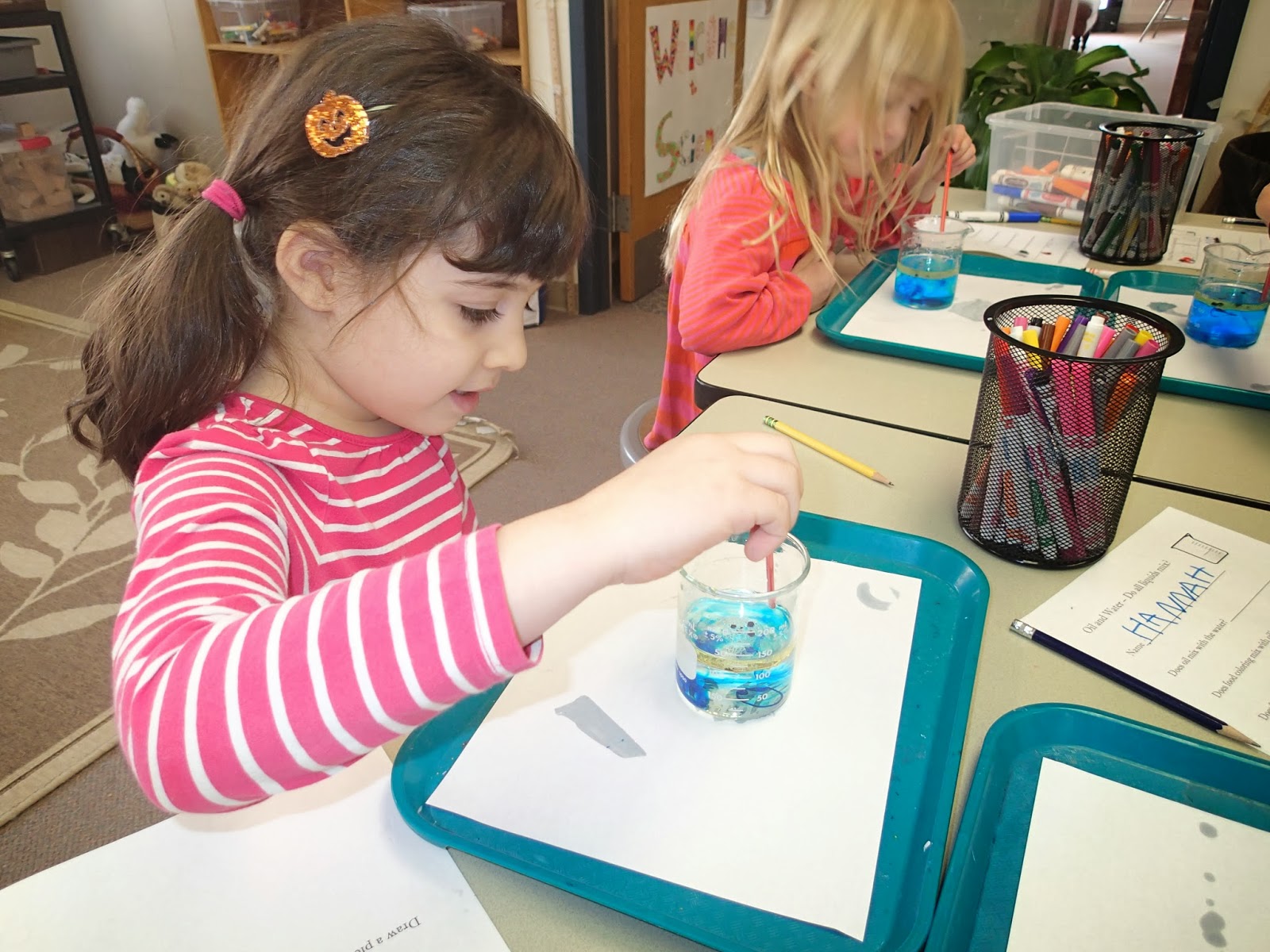
In Kindergarten chemistry, we experimented with liquids and mixing. Do oil and water mix? That was our first question that we asked. The students were so surprised when the oil stayed on top of the water no matter how much they tried to mix it! What came next was even more startling. Next we added drops of food coloring. The food coloring did not mix with the oil and in fact, became dozens of tiny, colorful drops suspended in the oil. When a drop fell through the oil to the water, it definitely mixed with the water! The students then did beautiful observational drawings of this experiment.




 Read Later
 Twitter
 Facebook
 Reddit
 Google+